
Wembley Stadium, London
2-4 November 2026
 United Kingdom
United Kingdom
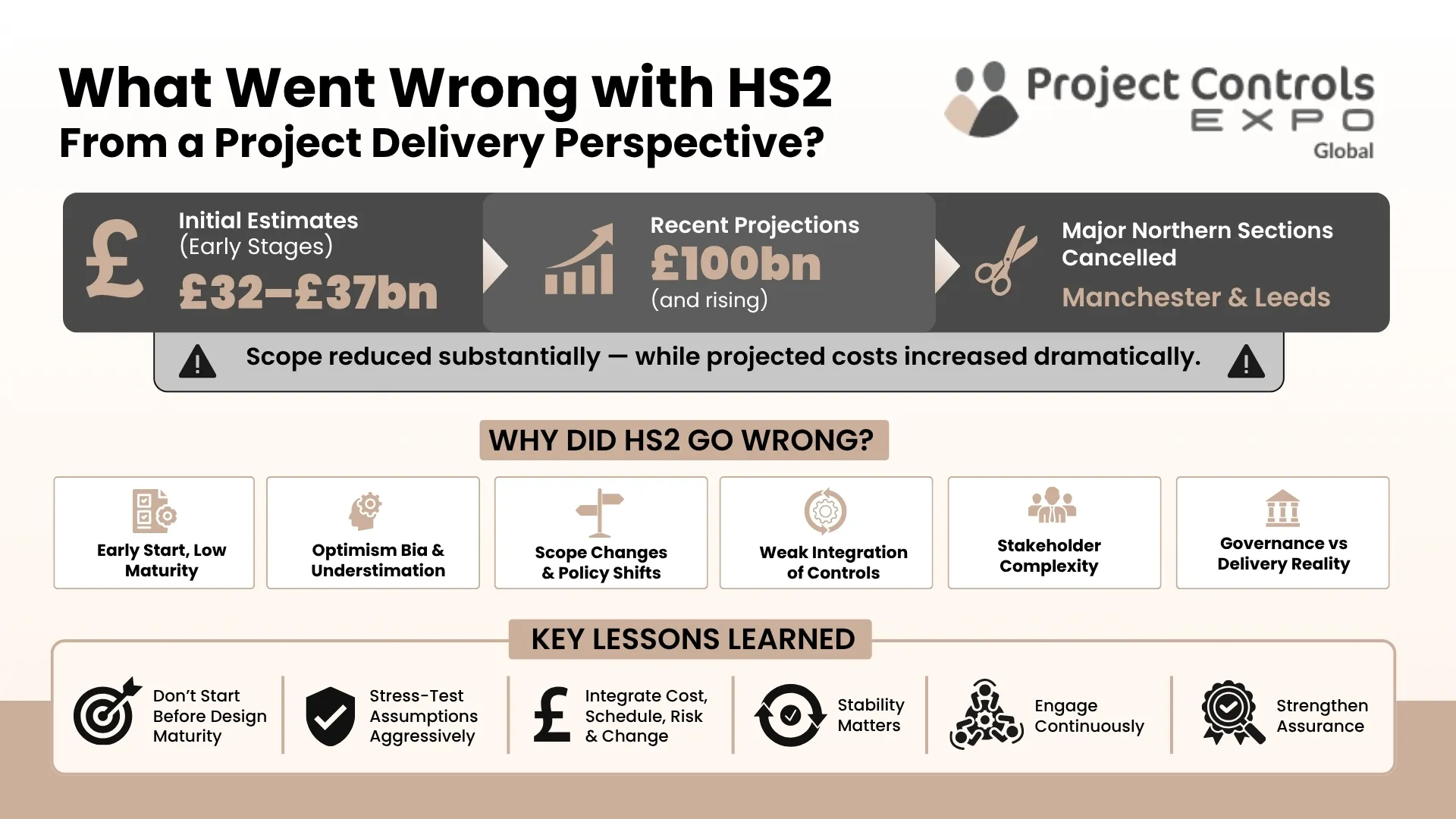
HS2 — What Went Wrong and What Must We Learn?
The latest BBC and wider media reports suggesting HS2 costs could now exceed £100bn were painful to read — not just as a British taxpayer, but also as a project professional who continues to advocate for successful project delivery.
What makes this even more difficult is that:
I've written a short article exploring:
What went wrong from a project delivery perspective and why megaprojects move from delivery mode → recovery mode.
The impact of shifting political priorities and how decisions made outside the project affected outcomes inside it.
How early cost estimates were shaped by optimism bias and the consequences of immature estimating practices.
Weak integration across cost, schedule, risk, and change — and why fragmented controls fail on complex programmes.
The role of governance structures and stakeholder engagement in shaping — and sometimes undermining — delivery outcomes.
Importantly, the article is balanced. HS2 is not simply a rail issue — it is one of the most significant modern case studies in megaproject delivery.
HS2 is not simply a rail issue — it is one of the most significant modern case studies in megaproject delivery.
It's about:
Public trust
Economic confidence
Responsible use of taxpayer money
The credibility of our profession itself
United Kingdom


