About the latest industry news and our offers by subscribing to our newsletters
x
Workshop :
Speaker :
Partners Showcase Setup (Partners only)
Networking Drinks @ Cambria Rooftop bar
Registration @Registration Desk | Breakfast @Champions Club - 1st Base
Introduction by :
Speaker :
Welcome & Opening Remarks by :
Speaker :
Keynote by :
Speaker :
Session T1 : Seeing Beyond the Surface: Detecting AIGenerated Content in Construction Reviews
The rapid adoption of generative AI has introduced underrecognised risks in construction, where invoices, change orders, estimates, and labour documentation form the foundation of financial controls and audits. Modern AI tools can now fabricate polished narratives, manipulate images, and produce complete document packages that closely mirror authentic records — without any field validation. Traditional audit workflows were not designed to detect AI-generated content that is consistent, well-structured, and statistically plausible. As GenAI lowers the cost of creating convincing artifacts at scale, the risk of undetected payment leakage and audit failure grows. This presentation examines AI-generated content through a construction-specific lens, evaluating the limitations of current detection technologies and introducing a structured framework of non-software-based methods — including metadata forensics, auditor pattern recognition, cross-verification, and statistical analysis. Together, these techniques form a layered defence to help auditors, project controls professionals, and construction managers detect the hidden hand of AI before it undermines project integrity and governance.
Speaker :
Session T2 : ConstructMind AI
Speaker :
Session T3 : Omega 365
Speaker :
Session T5 : Innovation in Project Management and Controls
The project management landscape is undergoing a paradigm shift driven by disruptive technologies redefining how projects are planned, executed and delivered. This presentation explores how the strategic integration of AI, BIM, Blockchain, AR, Reality Capture, IoT and Power BI is not an aspirational concept — but a practical reality. .Real-world examples demonstrate how these technologies solve long-standing industry challenges. BIM creates a single source of truth. IoT enriches it into a live tracking model.. Blockchain function as a smart contract. Power BI transforms data into actionable intelligence. The future of project management is not a distant vision. It is here.
Speaker :
Session T6 : Urban AI and its Effect on Project Controls
A new operational intelligence layer — Urban AI — is emerging at the intersection of artificial intelligence, digital twins, blockchain-enabled ledgers, IoT sensor networks and real time geospatial analytics. This convergence is reshaping how capital projects are estimated, scheduled, governed and de-risked. Urban AI transforms core project controls domains: → Cost Management — dynamic, risk-adjusted forecasting replacing static contingencies → Schedule Intelligence — adaptive sequencing replacing deterministic timelines → Risk & Governance — blockchain-backed transparency flagging deviations before disputes escalate → Performance Analytics — earned value metrics reflecting both project and city-scale impact Urban AI is not a distant future concept. It is rapidly becoming the infrastructure layer of next-generation cities.
Speaker :
Session D0 :
Speaker :
Session D3 : From Reports to Results: Turning Project Controls into Executive Decision Power on Capital Programs
Project controls functions are still viewed as reporting centres rather than strategic decision support — leaving executives unable to translate data into actionable insights. Drawing on 25+ years of experience across capital programmes totalling $50 billion+, this session explores how organisations can evolve project controls into a critical driver of executive decision-making. Real-world lessons from infrastructure, utility, transportation and life sciences programmes demonstrate how integrated cost and schedule controls, portfolio forecasting and standardised governance frameworks deliver earlier risk and opportunity visibility. The session addresses key barriers — siloed data, inconsistent reporting and leadership misalignment — and provides practical strategies for building scalable controls structures that improve accountability, accelerate decisions and enhance programme predictability.
Speaker :
Session D4 : Defining the Remit of Project Controls
This session will begin by establishing a clear definition of the Controls Framework and the key success factors that underpin effective program delivery. It will then explore the drivers behind redefining the Controls Framework, including evolving infrastructure delivery models, shifts in procurement strategies, and rapid technological advancements that are transforming the industry. Looking ahead, the session will examine the future of the program controls workforce and the capabilities required to succeed in an increasingly complex environment. The discussion will conclude with key takeaways and an interactive dialogue. Designed as a workshop, this session encourages active participation, engagement, and the sharing of perspectives to collectively shape the future of program controls.
Speaker :
Session PC0 : Time Is Money: Integrating Schedule and Cost for Better Project Control
Earned Value Management (EVM) is built on a simple principle: integrating scope, schedule, and cost to provide a more complete view of project performance than schedule or cost data alone. Many projects emphasize one dimension over the other, often avoiding full integration in the absence of a contractual EVMS requirement. While compliance with Federal Acquisition Regulations and standards such as EIA 748e may drive adoption, organizations can still realize meaningful benefits through a scaled approach. Attendees will learn how to: • use existing schedules to build baselines for effective performance tracking • improve forecast accuracy • analyze cost and schedule variances • scale EVM to capture its benefits without the burden of a fully compliant system See how EVM can be introduced using project management practices your organization likely already has in place.
Speaker :
Session PC1 : Project Controls Deserves a Seat at the University Table
Project controls quietly saves every megaproject from itself — yet in the US, it remains a hand-me-down skill picked up between crisis meetings. The UK and Australia recognised this years ago. With trillions flowing into infrastructure, chips, data centres and energy projects, the US is staffing programmes with people who learned EVM from a YouTube video. That is not a strategy. This session makes the case for accredited university project controls programmes — covering cost and schedule integration, risk quantification, AI literacy, commercial awareness and governance. AI won't replace project controls professionals. It will free them — if we build the pipeline now.
Speaker :
Session PC2 : Lessons Learned in Estimating, Last Planner®, and Target Value Delivery – (Progressive DesignBuild)
Progressive Design Build (PDB) requires project teams to commit to a Target Price while design evolves — placing intense pressure on estimating, planning and risk management. Traditional report-driven Project Controls cannot support the rapid decision-making this demands. This presentation draws on practitioner lessons from the Scarborough Subway Extension (SSE SRS) — a Canadian transit megaproject delivered by Scarborough Transit Connect (an Aecon JV) for Metrolinx — to show how Project Controls functioned as a confidence engine, not a back-end reporting function. Through an integrated operating system combining governance, estimating, production planning and risk, the team achieved Target Price with confidence despite evolving design maturity. Winner — PCE Mega Project of the Year 2025.
Speakers :
Session PC3 : Integrated program Controls 2.0
The Department of War faces a structural challenge: operational communities rely on real-time, data-driven decisions while acquisition governance remains rooted in periodic reporting, static baselines and retrospective Earned Value Management. The result: decision latency, limited risk visibility, and constrained performance management. This paper presents Integrated Program Management 2.0, a governance framework integrating cost, schedule, technical maturity, supplier readiness, and risk into continuous, decision-oriented performance management. Central to IPM 2.0 is a Digital Data Fabric supporting a Unified Performance Ledger, advanced analytics, and an Integrated Performance Index enabling portfolio-level prioritization. IPM 2.0 reframes program controls from periodic compliance to predictive outcome-oriented decision making.
Speaker :
Session PC5 : How to Be Unshakeable When All Eyes Are On You: Conscious Leadership Under Pressure
In today’s fast-moving business environment, leaders are expected to communicate with clarity, inspire confidence, and make high-stakes decisions under constant pressure. Yet many professionals struggle with visibility anxiety, self-doubt, and disconnection when the pressure is highest. In this engaging and transformational keynote, Rachael Jayne shares practical strategies to help leaders remain grounded, influential, and resilient when all eyes are on them. Drawing from conscious leadership principles, nervous system regulation, and high-impact communication techniques, attendees will learn how to lead with authenticity while maintaining performance in demanding environments. This session will explore: How stress and fear affect leadership presence and decision-making Techniques to communicate with confidence in meetings, presentations, and high-pressure conversations The connection between emotional regulation and team trust Practical tools to increase influence, visibility, and leadership impact Attendees will leave with actionable strategies they can immediately apply to strengthen communication, increase executive presence, and lead teams with greater clarity, calmness, and confidence.
Speaker :
Session PC6 : From Compliance to Conversation: How an EVM Podcast is Strengthening the Earned Value Community
Earned Value Management professionals are facing a common challenge: how do we transfer knowledge, develop the next generation of practitioners, and keep EVM relevant in an increasingly complex project environment? This presentation explores how a dedicated EVM-focused podcast has become an unexpected but highly effective platform for professional development, community engagement, and knowledge sharing across government, industry, and academia. Through candid conversations with Federal Project Directors, Control Account Managers, scheduling experts, EVMS executives, and thought leaders, the podcast has uncovered recurring themes that resonate throughout the EVM community: leadership, data-driven decision making, risk integration, baseline discipline, and the human side of project controls. Barbara will share insights from the podcast's most impactful discussions, highlighting lessons learned from practitioners who have successfully applied EVM principles to improve project outcomes. The session will examine how informal knowledge exchange complements formal standards and guidance, helping organizations build stronger project controls cultures and develop more effective EVM professionals. Attendees will gain: Key lessons learned from leading EVM practitioners across multiple industries. Insights into emerging trends shaping the future of EVM. Strategies for mentoring and workforce development through knowledge sharing. Practical approaches for connecting EVM data to leadership decisions and project success.
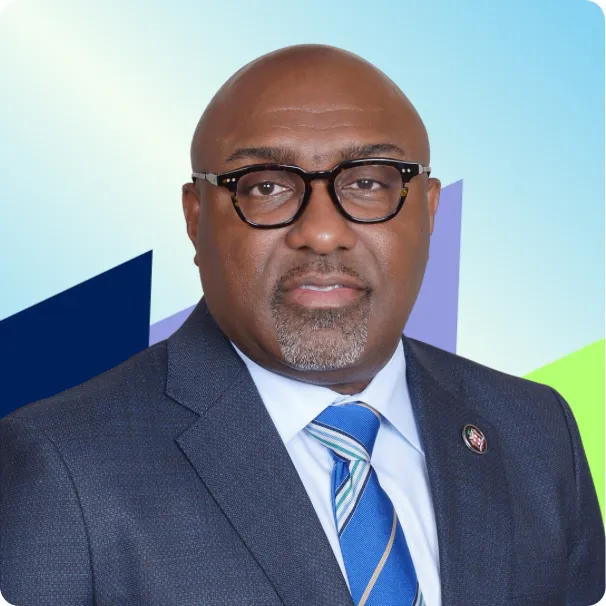

Speaker :
Session O1 : Owner-Side Cost Governance on a $1.2B Aviation Capital Program: Lessons from DFW Terminal C
Most airport terminal cost overruns do not happen because of bad luck. They happen because the owner never had a financial authority who was truly independent — someone whose only job was to protect the public's money, validate every proposal against market reality, and say no when the numbers did not hold up. DFW Terminal C is a $1.2 billion modernization — $833M in direct construction — at one of the world's busiest airports, operating 24/7 through every phase. As the embedded owner-representative Chief Estimator, I held full financial authority: independent validation of contractor proposals, owner-side pricing of scope changes, value engineering facilitation, and real-time contingency tracking across 47 change events. Three owner-side disciplines drove performance: independent cost validation eliminated information asymmetry in change order negotiations; a scope change governance system gave leadership unambiguous budget visibility at every reporting cycle; and proactive value engineering captured savings during design — when change costs nothing — not during construction. Combined result: $60M in verified savings against the approved capital budget, with zero scope reductions.
Speaker :
Session O2 : Risk-Integrated Target Pricing for Railway Network Upgrade Programs
Railway network upgrade programmes are among the most complex infrastructure deliveries — executed within live operational environments, constrained access windows, high system interdependency and evolving stakeholder requirements. Conventional deterministic schedules and static cost baselines are structurally inadequate for managing this uncertainty. This presentation advances a risk-integrated framework for target pricing and project controls, tailored to collaborative alliance-based delivery models and grounded in AACE RPs, FTA guidance and EN 50126 RAMS standards. Through Quantitative Schedule and Cost Risk Analysis (QSRA/QCRA), uncertainty is modelled into confidence-based outcomes — P50, P80 — replacing fixed estimates with dynamic, risk-adjusted target prices. The central finding: the primary limitation is not lack of data — but lack of integration.
Speaker :
Session O3 : Application of AI in Project Controls- A case of Using AI Technologies in Baltimore City Department of Works (DPW) Projects
City of Baltimore department of Public Works is exploring the use of Artificial Intelligence (AI) for real time performance monitoring and risk analysis. The objective of this exploratory study is to enhance predictive forecasting, flag early warning of delays and cost overruns, recommend corrective action based on past project behavior and historic data. AI tools/software were used to model possible construction sequences using resource constraints and activity logic to help identify and optimize the schedule by running a 3-point estimate model (optimistic, most likely and pessimistic) per activity or production rate. This results in side-by-side comparison for crew size, methods and sequencing. In addition, AI tools are useful in doing ‘what-if’ scenarios within minimal time. Overall, the analysis is critical in making informed decisions by providing an early warning system that identifies high-risk items, gaps in resources allocation and validates the sequence of construction. Although this is a limited study of about three projects, this study shows a promising outcome and the use of AI may be expanded to the whole portfolio.
Speaker :
Session O4 : AI-Aware Influences on Cost Estimate Maturity
AACE International’s Cost Estimate Classification System aligns estimate purpose with project maturity to support stage-gate decisions. Estimates traditionally progress from Class 5 to Class 1 as scope definition, engineering detail, and cost data increase, with accuracy refined through risk analysis and documented in the basis of estimate. The growing use of artificial intelligence is transforming this process. Applications such as automated quantity extraction, machine learning–based parametric modeling, and real-time probabilistic analysis can accelerate estimate maturity and provide continuous confidence updates. However, they also introduce challenges related to data integrity, model reliability, and transparency that must be addressed to maintain credibility. This paper examines how AI may supplement the classification of estimates and enhance decision-making practices. It proposes an “AI-aware” framework with three dimensions: information fitness index (IFI), model risk grade (MRG), and automation level (AL) to integrate AI while preserving governance, accountability, and decision confidence.
Speakers :
Session O5 : Modernizing Construction Management in Capital Improvement Programs: Implementing an Integrated Phase-Gate Project Controls Process
Capital improvement programs often struggle with outdated or inconsistently applied project controls processes, resulting in cost overruns, schedule delays, design quality issues, and increased claims exposure. This presentation introduces an integrated phase-gate project controls process that modernizes construction management by aligning cost, schedule, risk, and quality/claims management across the full project lifecycle. The session will examine common root causes of process failure, outline a practical methodology for evaluating and improving existing organizational processes, and demonstrate how structured gate reviews can strengthen governance, improve decision-making, and support design-to-budget and design-to-schedule outcomes. Attendees will gain a practical framework for improving predictability, transparency, and overall performance in capital improvement program delivery.
Speakers :
Mid-Morning Coffee Break @ Catering Area
Lunch Break @ Catering Area: Standing Lunch Area
Afternoon Coffee Break @ Catering Area
Drinks & Nibbles with LIVE Music @ 3rd base, Nationals Park
Registration @Registration Desk | Breakfast @Champions Club - 1st Base
Introduction by :
Speaker :
Welcome & Opening Remarks by :
Speaker :
Session T7 : Control What Comes Next: How Connected, Configurable, AI-Powered Platforms Are Redefining Project Controls
The most capable project controls teams still struggle when their technology doesn't match the way they work. Rigid platforms force process changes. Disconnected systems fragment data, restrict visibility and introduce cybersecurity risk. When you don't control your data, you don't truly control your project outcomes. This session explores how a new generation of connected, configurable construction management platforms are fundamentally changing how project teams operate (leveraging AI to shift from reactive controls to predictive, proactive delivery). Attendees will leave with a practical evaluation framework built around two criteria: connectivity (who controls and governs the data) and configurability (how well the platform adapts to your team).
Speakers :
Session T9 : AI-Enabled PMO Control Architecture: Advancing Project Controls from Automation to Predictive Governance
This paper presents a PMO Control Architecture governing over 100 concurrent IT initiatives in a regulated industry through system-enforced lifecycle controls and integrated performance intelligence. A Controlling PMO model was established embedding defined checkpoints across initiation, planning, execution and closure. Manual reporting was replaced with system-generated control validation, ensuring traceability, metadata integrity and disciplined governance. Project artifacts were consolidated within an enterprise PMIS designed around structured data capture. Standardised digital forms enabled categorisation by project type, phase, risk exposure and ownership — integrated with BI dashboards for real-time portfolio visibility and executive decision support. AI-driven anomaly detection, advanced risk identification, and automated detection of process and capability gaps further enhance this structured control environment.
Speaker :
Session T10 : Prediction AI in project controls
Most Prediction AI in project controls forecasts schedules and costs. But roughly 65% of project failures trace to management and people issues, governance breakdowns, decision latency, and contract behavior no schedule model can see. That is the gap the xPM Strategic Decision Engine closes. Built on 25 years across 13+ countries and over $6B in projects, and doctoral research on neural networks for cost intelligence, the Engine is a 7-layer Prediction AI architecture for every scale of construction, every delivery model, and every stakeholder seat: from project owner to specialty sub, pre- to post-construction. Each project is read through seven expert layers, Strategic Value Core, Governance Protocol, Capital Memory, Contract Risk Reality, Organizational Force Field, Physical Truth, and Digital Nervous System. A Cross-Layer Synthesis Agent then runs Conflict Detection, Compounding Risk, Priority Matrix, Systemic Weakness, and a composite xPM Score, compressing 169 techniques, 16 domains, 84 decision methods and 9 PM knowledge areas into one executive view. Four governing questions drive every output: What should be? What happened? What is happening? What will happen? turning data into expectation, history, present truth, and prediction owners and executives can act on with confidence. You will leave with a working framework for predicting failure before it surfaces in the numbers, and the language to brief your owner, your board, and your project team with certainty.
Speaker :
Session T11 : Overcoming Resistance to Change: Real-World Lessons in People, Process, and Adoption from Enterprise Project Controls Transformation in Hyperscale Data Centers
Delivering hyperscale data centre programmes demands excellence across risk, schedule and cost management. Yet even the most advanced tools fail when organisations face entrenched processes, siloed teams and resistance to change. Tom Phythian and Hasanthi Wijeratne — who together led the full lifecycle rollout of Omega 365 at Microsoft across one of the world's largest hyperscale data centre portfolios — share real-world lessons on the people and process dimensions of technology-enabled transformation. Key topics include overcoming organisational resistance, breaking down silos, change management at enterprise scale, and measured outcomes across hyperscale capital deployments. The session also highlights how Microsoft is applying AI to augment risk identification, forecasting and decision-making.
Speaker :
Session T12 : CRITICALITY AND CONCURRENCY THEOREMS
When developed, CPM focused on prospectively sourced, predictive, un-progressed schedules and not on delay analysis. This focus requires delay analysts to deal with the prospect of adapting CPM original criticality theories to retrospectively sourced schedulesa task made non-trivial by the lack of CPM calculations in the as-built window of an update (, i.e., left of the data date). A workaround involves analysts sourcing superseded, predictive schedules in for retrospective causal modeling and while applying a prospective view of criticality even in retrospective causal modeling. The integrated delay theory (IDT) opposes this oversimplification. Specifically, IDT criticality theorems explain that what counts as the critical path and whether two or/ more independent delays concurrently impact/ed completion depend on whether the schedule is prospectively or retrospectively sourced.
Speaker :
Session T13 : Governing AI as a Controlled Asset: An Organizational Readiness Framework for PMOs
Artificial intelligence is transforming how project delivery organizations manage schedule, cost, risk, reporting, documentation, and performance visibility. However, its potential often fails to translate into sustained operational value. Pilot initiatives frequently succeed in isolation but struggle to scale, while tools are deployed before organizations are fully prepared to use them responsibly. As a result, project controls professionals are left without clear guidance on where AI fits, how to validate its outputs, and who is accountable when issues arise. This presentation introduces a practical AI–PMO Organizational Readiness Framework for project-driven organizations. It positions the Project Management Office (PMO) as a natural starting point for AI adoption, given its role at the intersection of project data, governance, procedures, reporting, quality assurance, and executive decision support. The framework outlines eleven key readiness dimensions required to move from controlled pilot initiatives to scalable organizational adoption: leadership and sponsorship, workforce capability, data readiness, workflow redesign, role alignment, responsible AI governance, technology integration, change adoption, value measurement, scale-up readiness, and AI agent quality assurance.
Speaker :
Session R2 : Risk-Driven Project Controls: Why Risk Should Drive Forecasts, Not Sit in a Register
Mega capital programmes are delivered through complex contracting strategies, multiple stakeholders and accelerated schedules — introducing significant uncertainty in cost and schedule outcomes. Risk management is frequently treated as a parallel activity rather than an integrated component of project controls. Risk registers are developed and workshops conducted — yet outputs remain disconnected from cost forecasts, schedule updates and contingency management. This presentation introduces a practical framework connecting risk identification, structured risk registers and periodic reviews with core project controls processes — including Cost & Schedule Risk Analysis (CSRA). Drawing on EPC and EPCM programme experience, attendees will learn how to embed risk thinking directly into forecasting and decision-making — moving beyond standalone risk registers.
Speakers :
Session R4 : From Risk to Resilience: The Smart Path to Climate-Ready Project Delivery
In today’s rapidly evolving climate landscape, traditional risk management is no longer enough. This presentation reveals practical strategies for integrating climate risk into project controls and risk registers, empowering organizations to anticipate, adapt, and thrive amid uncertainty. Attendees will explore proven tools like climate scenario analysis, stakeholder engagement, and real-world case studies to identify both acute and chronic risks, enhance resilience, and unlock value for their projects. From leveraging climate data to embedding best practices for regulatory compliance and stakeholder confidence, this session provides a step-by-step roadmap from Risk to Resilience. Join us to learn how organizations are transforming risk registers into dynamic tools that safeguard investments and ensure long-term success.
Speaker :
Session R5 : Risk for the Rest of Us: Integrate Enterprise and Project Risk Capabilities without a PhD
A Schedule or Cost Risk Assessment can be an intimidating exercise... but it does not have to be! This session will help to demystify Risk inputs and reporting for all levels of experience. We will discuss the best methods of gathering inputs, including one vital prerequisite. Further, we will examine risk assessments in the session and gain consensus on the likely conclusions, ultimately equipping the group to be able to perform these while empowering analysts to brief their team using their own unique style. After this session, attendees will: • Understand the most commonly used risk inputs for a monte-carlo based Risk Assessment • Explain the distinction between a Risk Exposure Histogram and a Risk Drivers Tornado Chart • Quickly assess charts to be prepared to brief risk in an impromptu fashion • Steer Program Managers and Executives to the most important Enterprise and Project threats to mitigate so that the appropriate decisions can be made.
Speaker :
Session C2 : Strengthening Design-Build Contractual Hygiene with Equitable Risk Allocation
In design-build delivery, disproportionate risk allocation drives cost overruns, schedule delays, forecast volatility, litigation, adversarial relationships, insurance coverage gaps, compromised deliverables, and claims. Misaligning risk with control compromises project controls processes, including estimating, scheduling, and cost forecasting. The Design-Build Institute of America (DBIA) emphasizes that successful design-build projects require equitable risk allocation to the best-equipped party, enhancing predictability, integrity, and contingency effectiveness. This session examines practical mechanisms influencing performance, including limitation of liability, consequential damage waivers, pre-bid scope definition, integrated project delivery principles, contingency allocation, and coordinated insurance. These are discussed as levers for improving transparency, reducing uncertainty, and strengthening cost and schedule control. The session also explores innovations like data-driven tools and predictive analytics for early risk identification before they materialize into cost and schedule impacts. Attendees will gain actionable strategies to align contractual risk with project controls, boosting forecast confidence and promoting proactive risk management for better results.
Speaker :
Mid-Morning Coffee Break @ Catering Area
Lunch Break @ Catering Area: Standing Lunch Area
Afternoon Coffee Break @ Catering Area
Networking Drinks @ Cambria Rooftop bar ( Everyone is invited)
© Project Controls Expo 2026. All rights reserved

United States